
The Kitchen Heat: Why Zoom Can't Replace the Pass

Updated: 4 days ago
There's a question making the rounds right now: Would you rather make $240K working in an office five days a week, or $120K working fully remote?
The internet lost its mind over it. LinkedIn, TikTok, everyone had an opinion.
But here's what nobody's saying: This isn't a salary debate. It's a speed debate.
And speed, real speed, happens at the pass.
What the Hell is "The Pass"?
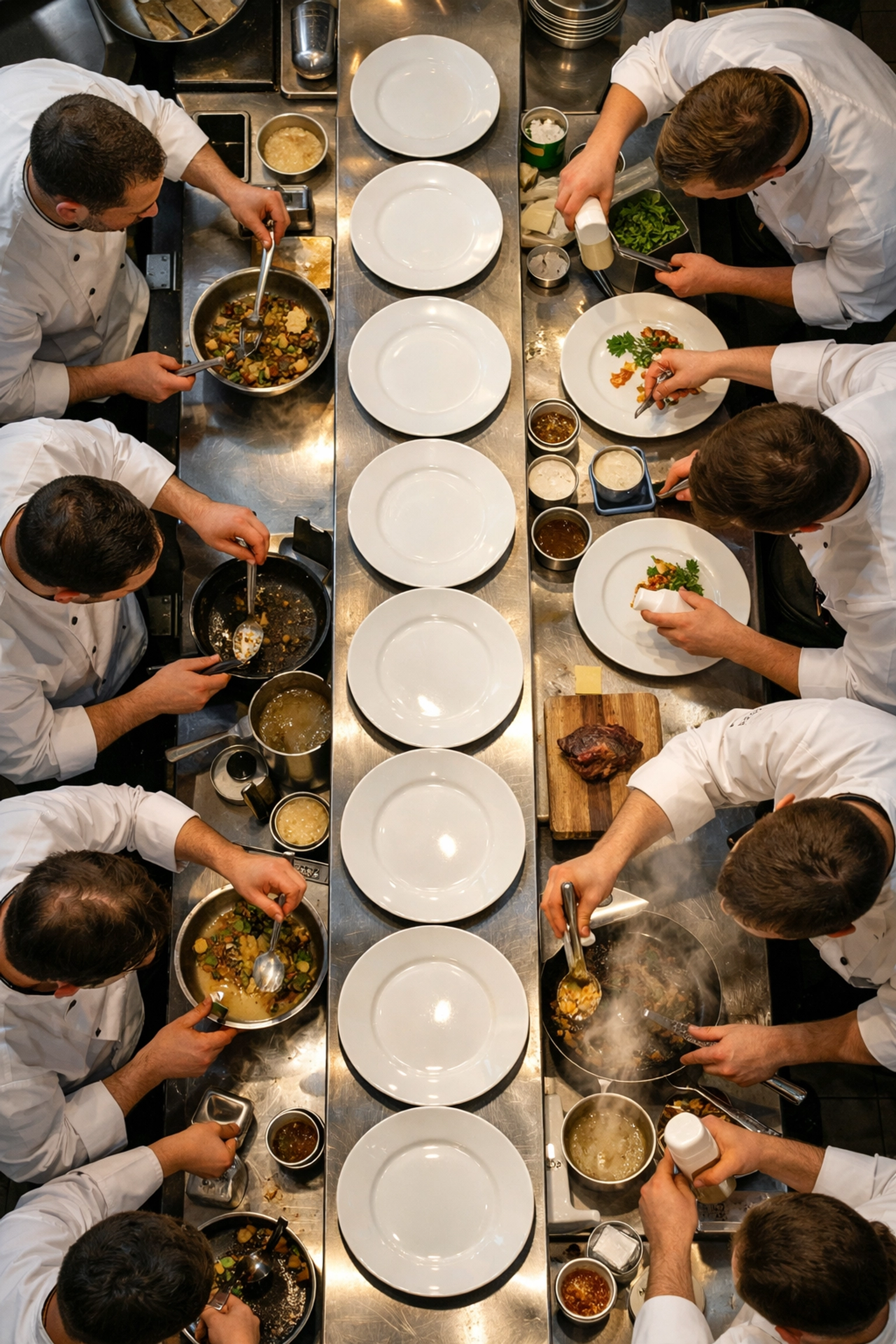
If you've never worked a dinner rush, let me paint the picture. The pass is the counter between the kitchen and the dining room. It's where tickets come in, plates go out, and the chef calls every move. It's chaos. It's precise. It's loud. And it's where you learn faster than anywhere else in the building.
You don't schedule a meeting to ask why the sauce broke. You don't Slack the sous chef to find out if Table 12's salmon is medium-rare or well-done. You turn your head three feet to the left and you get the answer in 12 seconds.
That's osmosis. Gary Vaynerchuk calls it that in his latest piece on remote work, and he's dead right. In the kitchen, we just call it survival.
The 12-Second Answer vs. The 3-Week Runaround
Here's a story Gary shared that should make every leader uncomfortable:
An employee told him she almost quit when her company mandated more office days. The commute sucked. Traffic was brutal. But then something happened. She walked three seats over to ask a question, and got an answer immediately. That same question used to take three weeks. One meeting request, two reschedules, radio silence, repeat.
Three weeks became 12 seconds.
In a kitchen, if your beurre blanc breaks and you schedule a troubleshooting call for next Tuesday, you're fired. Not metaphorically. Literally. The ticket doesn't wait. The guest doesn't wait. The rest of the line doesn't wait.
Businesses are no different. Your competitor isn't waiting either.
Remote work sold us convenience. And for some people, in some roles, that works beautifully. But let's not pretend it didn't cost us something massive: momentum.
Speed is a competitive advantage. Proximity creates speed. Zoom creates friction.
The Thing Nobody Wants to Say Out Loud
Remote work kinda sucks for a lot of people.
I know, I know. Everyone loves talking about work-life balance, seeing their kids more, skipping the soul-crushing commute. That's real. I'm not dismissing it.
But here's what's also real: Humans weren't built to work in isolation.
There's hard data showing people live longer in community. Actual community, not a Slack channel with 47 unread messages and three cry-laugh emojis. Community means the friend you grab coffee with after a brutal morning. The coworker who notices you're off and asks if you're good. The random hallway conversation that turns into your next big idea.
Remote work promised freedom. For many, it delivered loneliness and doom scrolling in sweatpants.
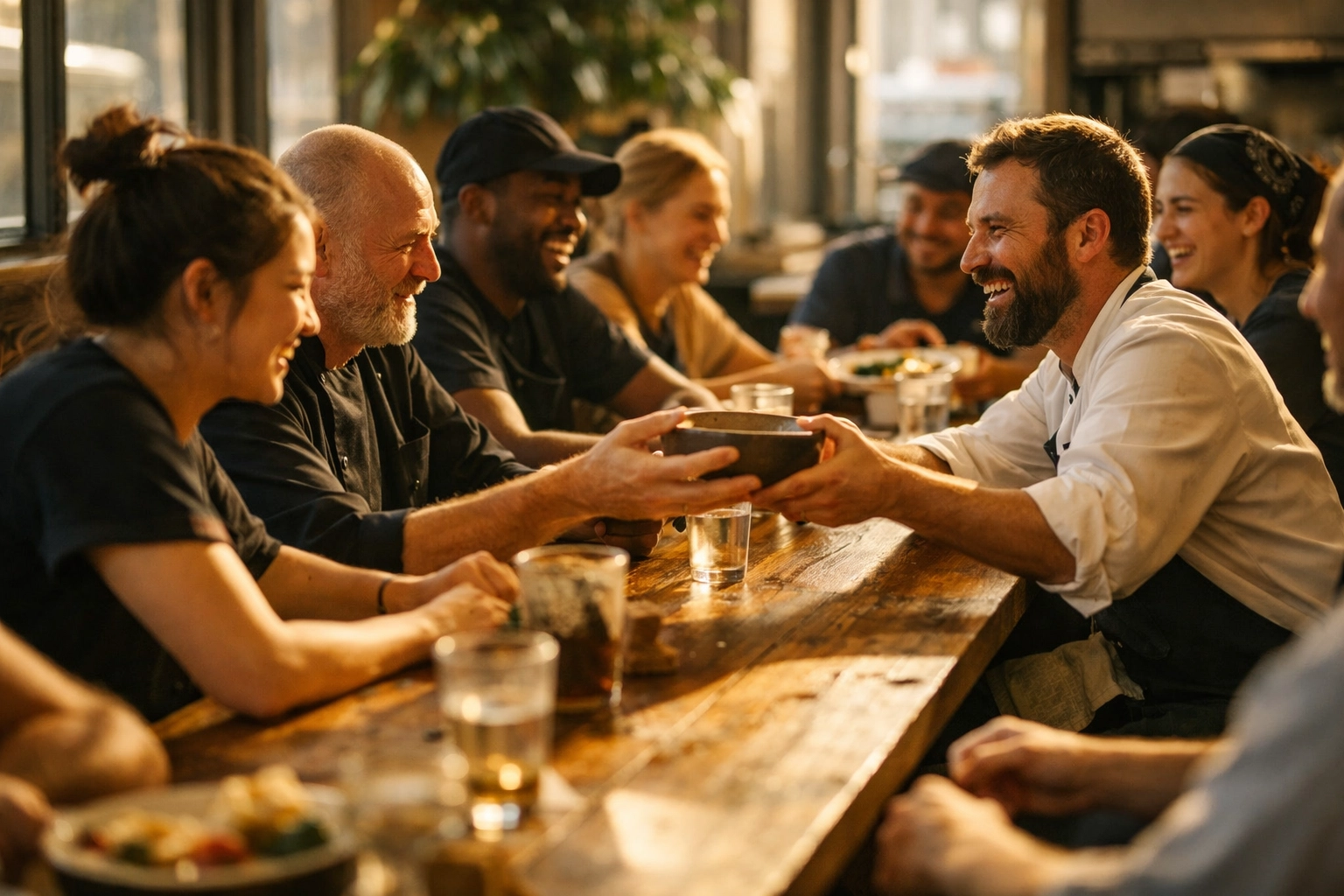
In a restaurant, we have something called "family meal." Before service, the whole team sits down together. You eat. You talk. You reset. It's not about the food. It's about the tribe. It's the glue that keeps 40 people moving as one organism during a 200-cover Saturday night.
The office, the real office, not the Zoom gallery, is your family meal. And a lot of leaders gave it up without realizing what they lost.

But What About My Commute? My Kids? My Sanity?
Fair question. And here's my answer: There are no absolutes.
If you're 33 with two kids and a couple friends in the neighborhood, working from home might be perfect. If you're 26, single, living alone in a one-bedroom with no reason to leave except groceries, remote work might be slowly killing you.
Different ingredients need different heat. A delicate fish cooks at 350°F for 8 minutes. A braised short rib needs 275°F for 4 hours. You don't use the same method for everything and expect good results.
Leadership works the same way. Self-awareness is the most important tool in your kit. The question isn't "Is remote work good or bad?" The question is: "What does my operation actually need right now?"
Because here's the thing, most leaders aren't making that call based on data. They're making it based on comfort.
Comfort kills speed. Comfort kills culture. Comfort kills growth.
The Real Cost? Waiting.
This ties directly into something I've been talking about all week: the cost of waiting.
Leaders think waiting feels safe. Thoughtful. Responsible.
Waiting costs cash.
And remote work, when it's the wrong setup for your team, creates so much waiting. Waiting for the Zoom link. Waiting for the reply. Waiting for the rescheduled meeting. Waiting for the "quick question" that takes four days to resolve.
Meanwhile, pressure is mounting. Revenue is stalling. Your competitor just made three moves while you debated the hybrid schedule in a Monday morning standup.
The leaders who win right now? They move without full certainty. They decide. They adjust after. They stop protecting comfort and start protecting momentum.
If the remote vs. office question has been sitting on your desk for more than seven days, pressure already sent you the message. You just haven't acted on it yet.
So What's the Play?
Here's my take, stripped down:
Remote work isn't the enemy. Lack of intentionality is.
If your team works remotely and you've designed systems for speed, proximity, and real community, you're fine. If your team works remotely because "everyone else is doing it" and you're now watching efficiency drop, morale tank, and talent leave, you've got a decision to make.
In-office work isn't a magic bullet either. Plenty of offices are full of people sitting in meetings that should've been emails, hiding behind busy, and avoiding hard conversations. Location doesn't fix culture. Leadership does.
The question you need to answer isn't where your team works. It's this:
Are we moving fast enough to win?
If the answer is no, something has to change. And it probably starts with the setup you've been too comfortable to question.
One Move. Right Now.
Here's your homework, Chef 2 Chef:
Pick one decision you've been sitting on related to your team's setup. Remote, hybrid, in-office, whatever. One decision that's been waiting longer than it should.
Make the call this week. Not next quarter. This week.
You don't need perfect data. You need momentum. Momentum creates data. Data sharpens the next move.
Waiting creates noise. Noise hides problems.
If you're stuck in the "remote waiting room" and you know deep down your operation is losing speed because of it: it's time to MOVE.
And if you need a sounding board to cut through the noise and figure out what that first move actually is, that's what I do. I help leaders stop protecting comfort and start protecting growth.
Check out the Table for One Leadership Course or let's talk strategy at Fischer Research Group.
The pass is hot. The tickets are piling up.
What's your next move?


Comments