
Struggling For Business Growth? 10 Chef-Proven Motivation Techniques Every Executive Should Know
- Christian J. Fischer

- Dec 6, 2025
- 5 min read
Updated: Dec 8, 2025
Your team's dragging. Revenue's flat. And you're wondering why your best people are checking out mentally: or worse, checking out completely.
Here's the hard truth: most executives motivate like short-order cooks instead of master chefs.
After 15+ years in kitchens and now helping executives scale their leadership impact, I've seen the same pattern. Leaders who think motivation is about rah-rah speeches and pizza parties wonder why their teams burn out. Meanwhile, The Chefs Chef approach: the one that helped my clients achieve 30% revenue growth: treats motivation like a carefully crafted dish.
Every ingredient matters. Every technique builds on the last. And when done right? Your team doesn't just perform: they dominate.

The Kitchen Truth About Motivation
In a professional kitchen, motivation isn't optional. Miss your mark, and 200 dinner guests go hungry. Drop the ball, and your reputation: and business: dies that night.
Smart motivation experts know what master chefs figured out centuries ago: sustainable performance comes from systems, not speeches.
Let's break down the 10 chef-proven techniques that separate thriving businesses from the ones still struggling for growth.
1. Mise en Place Your Team's Purpose
The Technique: Before any chef touches a knife, they set up their station. Every ingredient prepped. Every tool in place. Every team member knows exactly what they're responsible for.
Your Move: Stop assuming your people "get" how their work connects to company success. Map it out. Show your sales team how their pipeline directly feeds the marketing budget. Show your operations team how their efficiency creates room for innovation.
The Payoff: When teams see their role in the bigger picture, discretionary effort skyrockets. They stop doing the minimum and start solving problems you didn't even know existed.
2. Stop Micromanaging the Kitchen
The Technique: Master chefs don't stand over every cook, watching them julienne carrots. They set standards, train the technique, then trust their brigade to execute.
Your Move: Define the outcome. Teach the standard. Then get out of the way. Your job isn't to manage tasks: it's to remove obstacles so your team can cook.
The Payoff: Autonomy-driven teams show 38% higher productivity. Plus, you get your time back to focus on strategy instead of babysitting.

3. Taste and Adjust in Real Time
The Technique: Great chefs taste constantly. Mid-prep. During service. After plating. They give immediate, specific feedback: "More salt," "Perfect sear," "Table 12 needs this in 3 minutes."
Your Move: Ditch the annual review nonsense. Give micro-feedback weekly. "That client presentation? Your opening hooked them perfectly. Next time, include one more data point on ROI."
The Payoff: Teams that get real-time recognition show 27% higher profitability. And specific feedback creates compound improvement instead of hoping people figure it out.
4. Cross-Train Your Brigade
The Technique: In elite kitchens, everyone learns multiple stations. The pastry chef can work grill. The garde manger can run expo. When someone calls out sick, service doesn't miss a beat.
Your Move: Invest in your people's growth beyond their job description. Send your marketing manager to sales training. Let your ops person shadow the finance team.
The Payoff: Cross-trained teams are 50% more resilient during crunch periods. Plus, employees who see growth opportunities stay 40% longer.
5. Fire Up Team Chemistry
The Technique: The best kitchens aren't just workplaces: they're tight crews who have each other's backs. They celebrate wins together and cover each other during the rush.
Your Move: Create structured opportunities for your team to connect beyond work. Not forced fun: genuine collaboration on projects that matter. Let them solve problems together.
The Payoff: High-trust teams move faster, communicate cleaner, and generate more innovative solutions. Chemistry beats talent every time.
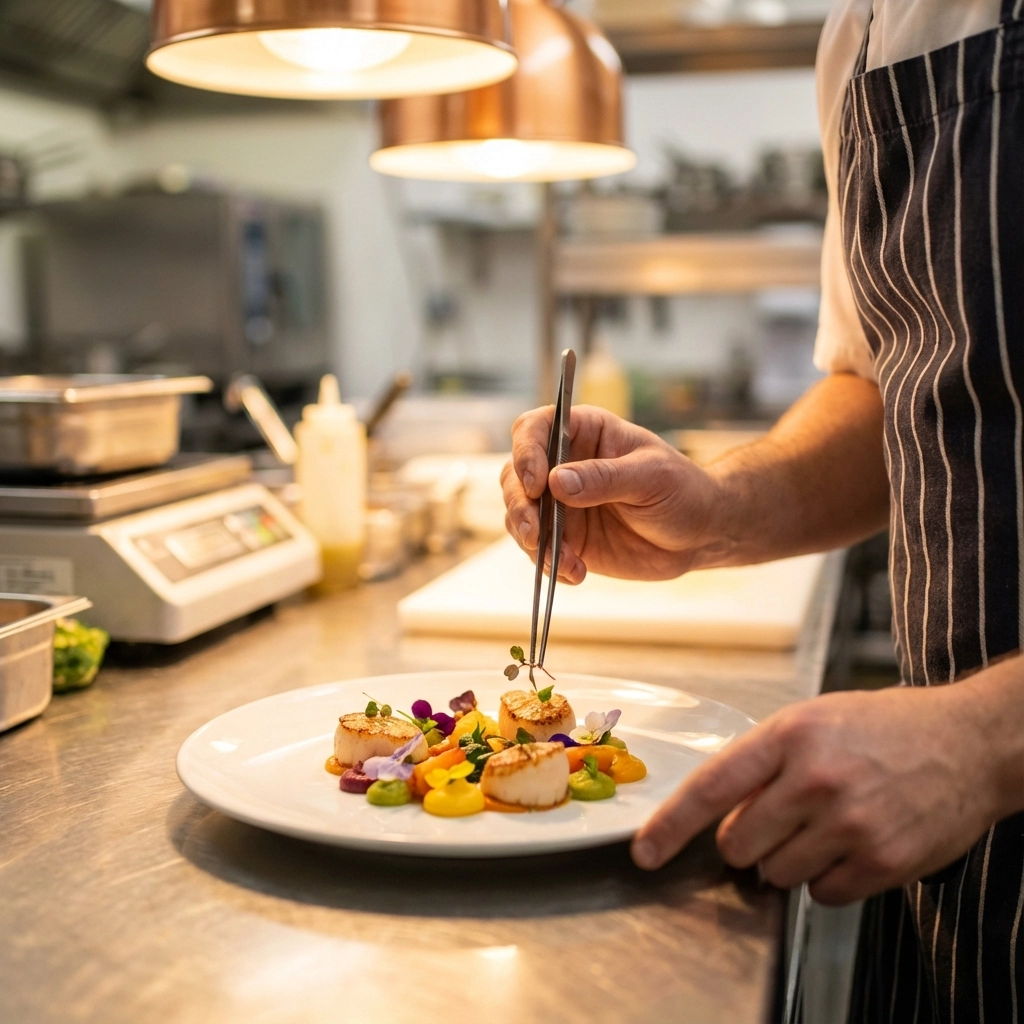
6. Lead Like a Chef de Cuisine
The Technique: The best Chef 2 Chef leaders aren't dictators: they're teachers. They show technique, explain why it matters, then coach improvement. They're tough but fair, demanding excellence while developing skills.
Your Move: Shift from "boss" to "coach." Ask better questions: "What would you try differently?" "Where do you see the biggest opportunity?" "How can I support you better?"
The Payoff: Teams with coaching-style leaders are 3x more likely to be engaged and 2x more likely to hit performance targets.
7. Prep Your Goals Daily
The Technique: Every service starts with a clear briefing. Tonight's covers. Special dietary needs. Table times. Everyone knows exactly what success looks like before the first ticket hits the pass.
Your Move: Break big goals into daily wins. If Q4 target is $500K, what needs to happen this week? Today? Make success visible and trackable.
The Payoff: Daily goal clarity increases team performance by 25% and reduces the "are we winning?" anxiety that kills momentum.
8. Keep the Kitchen Transparent
The Technique: In open kitchens, everyone sees everything. No hidden drama. No secret recipes. When something's not working, everyone knows and everyone fixes it.
Your Move: Share the real numbers. The wins, the challenges, the market pressures. Treat your team like the professionals they are.
The Payoff: Transparent organizations show higher employee loyalty and faster problem-solving. Trust is the ultimate performance multiplier.

9. Daily Standup Service
The Technique: Before every service, chefs connect with each station. Quick check-ins. "How's your prep?" "Any concerns?" "What do you need from me?"
Your Move: Weekly one-on-ones aren't enough. Quick daily or bi-weekly touchpoints keep small problems from becoming big fires.
The Payoff: Regular check-ins prevent 80% of performance issues and create space for proactive problem-solving instead of reactive crisis management.
10. Season to Taste
The Technique: No two palates are identical. Master chefs adjust their approach based on the diner, the occasion, the season. Personalization is everything.
Your Move: Learn what motivates each team member individually. Some want public recognition. Others prefer development opportunities. Some need autonomy. Others want clear structure.
The Payoff: Personalized motivation approaches increase individual performance by up to 40% and reduce turnover by 35%.
The Chef's Secret: It's All Connected
Here's what separates The Chefs Chef from everyone else: these techniques don't work in isolation. They build on each other.
Purpose gives context. Autonomy creates ownership. Feedback drives improvement. Growth builds loyalty. Chemistry accelerates everything.
The result? Teams that don't just execute: they innovate. Businesses that don't just survive market pressure: they thrive through it.

Your Next Service Starts Now
The difference between struggling businesses and dominant ones isn't talent. It's not market conditions. It's not luck.
It's leadership systems that consistently motivate peak performance.
Your team is watching. Your competitors are gaining ground. And your next quarter's results are being shaped by the decisions you make this week.
Ready to stop managing like a short-order cook and start leading like The Chefs Chef?
Fischer Research Group has helped executives implement these exact systems with measurable results: 30% revenue growth, 40% improvement in team retention, and the kind of leadership authority that transforms industries.
Whether you're ready for our signature Book Blueprint Course to establish your thought leadership, need our KnowImpact app to track your progress, or want to explore Fischer Forward Consulting for hands-on implementation: we've got the tools to help you execute.
Visit christianjfischer.com to see how The Chefs Chef approach can transform your leadership and accelerate your growth.
The kitchen's hot. Your team is waiting. Time to cook.


Comments